

Current Affairs

Current Affairs is Electricity’s Canada monthly newsletter featuring advocacy efforts, member success stories and news regarding the industry.

US

Issue 57 - September 2023

Electricity Canada and U.S. Affairs

Many people don’t realize that there are over 31 transmission lines that connect U.S. and Canada, providing electricity to millions of Americans and Canadians. Working together, U.S. - Canada electricity trade and integration delivers a more resilient, clean and affordable system for everyone. Current Affairs sits down with Robin Yee, Manager of U.S. relations to connect the dots—or the transmission lines, as the case may be.

Hi Robin. Over 70 TWh of electricity flows across the U.S. Canada border, which represents a trade relationship of over $3 billion. What are the biggest concerns with US-Canada relations?

The biggest concern with Canada – U.S. relations is that both countries have set really ambitious climate goals and are going through huge energy resource mix transitions.

We've come from this phase where electricity companies had more ability and longer timelines to plan and build and construct as needed, and now we're having to transition and do a lot of changes much more rapidly.

Making sure that the grid remains reliable while we're going through this is a completely different challenge. We are trying to bring together completely new and innovative technologies to work together in ways that we haven't done at this scale and, we're trying to do that while also working towards non-emitting goals. Trying to do those both in parallel is intertwined and complex -that is really the key challenge.

This summer we've been facing real challenges with extreme weather. How have both countries worked together to make the grid more resilient?

Both countries have a long history of working together to keep the grid reliable, and the cross-border relationship is a big part of that. This plays out in different ways.

There's a long history of mutual aid in the case of outages. Crews will cross the border to go and assist neighbors with bringing the lights back on. Another part of it that's built into the system, is simply just having the Internet interconnections between the different regions, it builds resilience. For example, if there is a cold snap in one area or a storm, you have the ability to import energy from another region. This can help meet increased demands or provide alternate supplies rather than having to overbuild in one area. So that's a really interesting compliment between Canada and the United States, that's part of the reason why energy often will flow North and South. It's because we have different things to offer each other and that can be used to strengthen both countries.

There are also forums and groups and councils that work together to make sure that we are looking ahead and preparing for serious incidents or responding together as an industry.

How does our net zero future come into play with U.S. relations?

Well, both countries right now are working towards net zero futures or non-emitting goals and making sure we work together is important. There's new policy being introduced in the States at the federal level and at the State level. We're also seeing policy come up in Canada and regulations related to that and electricity is going to play a huge role, not only for reducing emissions as an industry, but also for supporting other industries and sectors that will need to ship the energy sources they rely on.

Tell us about the North American Electric Reliability Corporation and Electricity Canada’s work with the organization?

NERC or the North American Electric Reliability Corporation, is the regulator for reliability across North America and the integrated electric grid. It is a really impressive and complex organization that develops reliability standards. This needs to be done at a very technical level and it’s informed by industry experience, but it also has to be regulated and enforced in appropriate ways.

Electricity Canada works to support a strong relationship with NERC for our Canadian members and entities, making sure that Canadian perspectives are represented. There has been recent work on, weather issues or issues that are influenced by Canadian geography.

Making sure that there is good representation and co-operation going on in that, we're providing input into the development and direction of policy is important for NERC.

NERC holds one of its Board meetings per year in Canada and the most recent was in Ottawa. There was about 100 people from NERC and across industry and government representation who participate, to talk about what the big challenges are in electricity reliability and how we're working to solve them. It's not easy to find answers, but NERC does a lot of assessments or studies which can be really which can be resources for navigating the transition.

What file are you most looking forward to tackling in your work?

I think really what's most interesting is making sure that the right people are talking to each other because electricity so integrated, it affects so many different aspects of society. You have government, you have policymakers and regulators, you have industry, and you have different needs from the users who are now starting to become part of that. As people generate their own electricity, we’re trying to support the conversations between all these different groups, and I think that’s a really exciting and interesting challenge.

Why is the North American electricity relationship so important?

The electricity relationship is so important because it's the foundation of how we have built our society essentially across North America. And it really does depend on this cooperation across regions, which really leads to a strengthening and resilience and reliability for people who depend on electricity. When electricity was just coming more into society it was very regional and localized. Cooperation between different regions meant that instead of overbuilding in one area, you could work with your neighbor to balance things out and both of you could have the benefits of that. That has continued to be the case and it's by working together that we've been able to have the wonderful benefits of electricity in our society.

Other Stories

  • Clean Electricity Strategy announced
  • Clean Electricity Regulations announced
  • Databytes: Employee engagement in the electricity sector
  • The Flux Capacitor – Episode 80
  • North American Electric Reliability Corporation summer board meeting 
  • Over 11,000 Enrolled in EFIC
  • Electricity Canada publishes the 2022 Service Continuity Report
  • Electricity Canada responds to Telus Leave to Appeal
  • Electricity Canada welcomes Cisco System
  • Let's ensure multi-family buildings are ready for the EV wave
  • The Lightbulb
Read now
I Stock 177332436

Issue 56 - August 2023

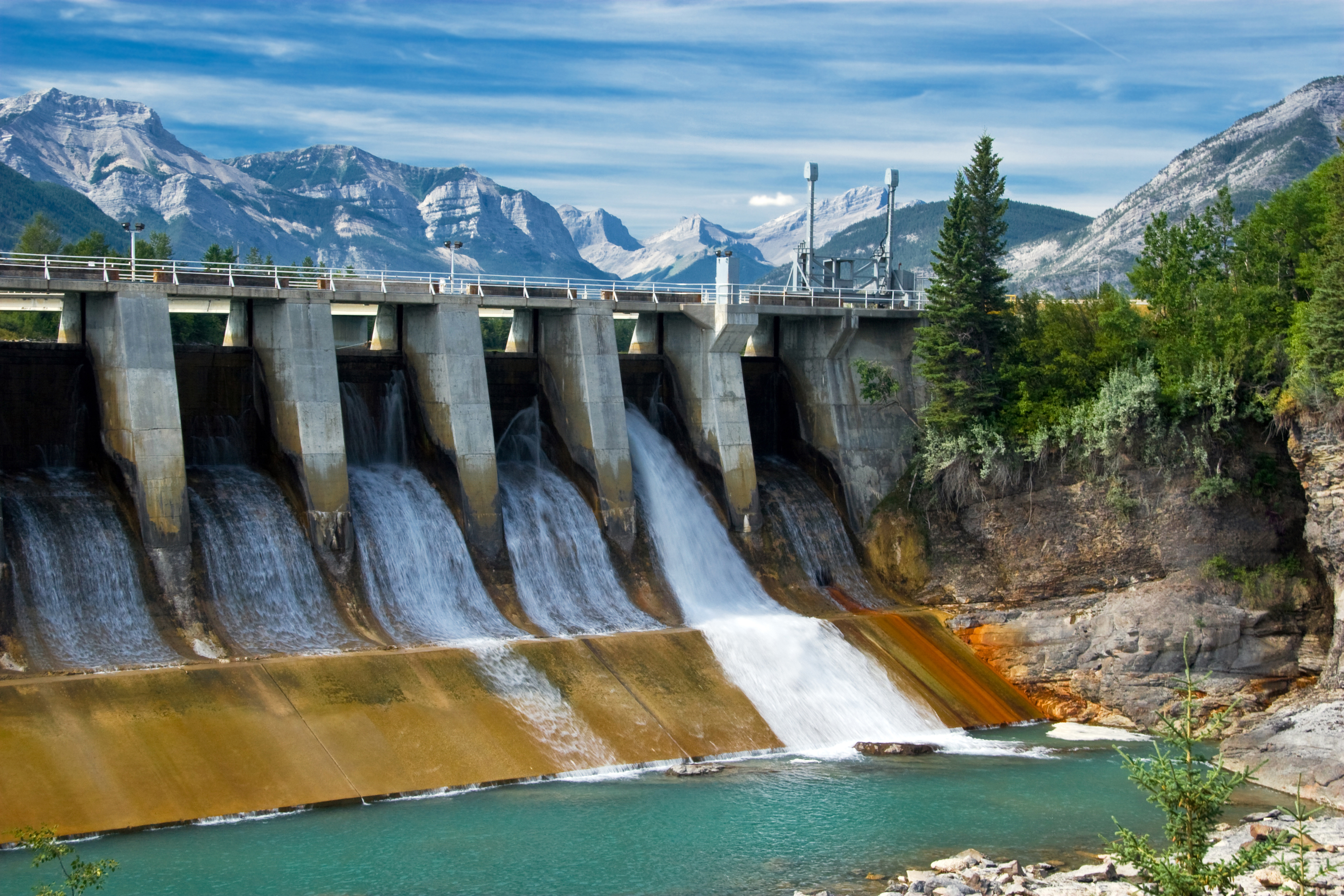
Electricity Generation in Canada

On July 12th and 13th, representatives from Electricity Canada’s Generation Council (G-Council) met in Calgary, Alberta for their annual face to face meeting. Generation Council focuses on electricity generation issues, particularly when it comes to energy integration, innovation, climate change mitigation and adaptation, environmental stewardship, and Indigenous affairs. Current Affairs sat down with Brittany Botting, Director of Generation to explore these issues and how they are currently impacting the sector. Hi Brittany, thank you for joining us!

The Federal Budget announced in March that there will be some incredible opportunities for more generation across Canada. What is going to be the biggest challenge to funding it?


I think the largest challenge is just the scale of investment that's required to meet the net zero by 2035 and 2050 targets. There is going to be a need for billions, if not trillions, of dollars of investment over the next three decades into not just the generation space, but also transmission and distribution to decarbonize the electricity grid not to mention meeting the electrification needs for the entire economy. The scale of the challenge is really enormous. It was very positive to see in Budget 2023 investments and support from the federal government to help electricity companies meet that challenge.

The biggest priority for G-Council in Electricity Canada’s business plan for Q1 was the Clean Electricity Regulations (CERs) which will give important guidance on how decarbonizing the grid will roll out. It's now Q3 and we still haven't seen the regulations. Do you think we'll see them soon? How do you prepare for regulations that haven't been released yet?


We do expect to see the Clean Electricity Regulations in the coming weeks. That is a signal that we have been consistently getting from government. Hopefully we will see at least a first draft of the regulations in August or September, because in terms of preparation, the more delay that there is in releasing the clear rules makes it a little bit more challenging for the sector to meet the 2035 objectives.

That said, I think it is more important that we have a workable rules that are flexible and actually reflect our current realities that the sector can then go ahead and implement. So, if the government is taking time to consider these regulations because they're so consequential, that's probably a good thing.

In terms of preparations, we do have enough of a frame, if you will, coming from the government that we're able to start having meaningful conversations with members to get an industry-wide perspective on what the CERs will mean. It gives us time to get our ducks in a row and figure out what is most important, and what values need to be reflected in the final CERs. Obviously, we all would love to see some numbers sooner rather than later, but given the framework that's out there already, there is some information to work from in order to start formulating a response.

Outside of the CERs and the federal budget, what is the biggest challenge in the generation world right now?


I think that goes back to the first question. It's the scale of the challenge and opportunity of meeting our 2035 and 2050 goals. Also in the 2023 Federal the sector received a lot of supportAs a result, a big focus of Generation Council is to make sure those supports can help us get to where we need to be going. That includes the Investment Tax Credits, but also targeted programming, the Canada Infrastructure Bank and everything in between.

What is the biggest opportunity?


The biggest opportunity is also the challenge, right? There's going to be a huge demand increase for electricity, double to triple by 2050. That is a huge and opportunity in and of itself for our members to gobble up a larger share of the energy market.

What project are you looking forward to working on with members the most?


Probably the CERs. These are going to be so consequential for how the sector is governed for the next 12-13 years. I'm excited to at least start tackling that with members.

What are those next steps?


Generation Council have decided a couple of things that we're going to do to start preparing for the CER response. One of that is developing a policy brief that lays out some recommendations that are industry wide to help put some positive options on the table for government. We're also developing common messaging that we are hoping the sector utilizes so that we can all be singing from the same song book.

Other Stories

  • Electricity Canada at the United Nations
  • Reliability and Resiliency Award applications close August 31st
  • DataBytes reviews the Northeast blackout of 2003
  • New episode of the Flux Capacitor podcast
  • Affordability of the Energy Transition Webinar
  • Electricity Canada welcomes a new Corporate Partner
Read now
I Stock 525039348

Issue 55 - July 2023

Electricity Reliability in Canada

Electricity Canada’s upcoming Service Continuity report revealed some interesting data about the reliability of our electricity grid. From extreme weather events, to squirrel disruptions, all power interruptions, no matter how small, are recorded and categorized for utilities to find ways to minimize the impact to customers and maintain grid stability.

Current Affairs sat down with Dan Gent, Director of Transmission and Reliability and Lakshmi Venugopal, Data Analyst to talk about what they learned.

Hi Dan and Lakshmi, tell us a little bit about the Service Continuity report and the type of information collected.

DG: This report is going to cover 2022 and 2021. It’s really the meat and potatoes of reliability.

LV: There are five things that the report captures. The first is SAIFI (system average interruption frequency index) which will tell you the frequency of the outages in a given year and we have SAIDI (system average interruption duration index) which will tell you the duration of the outages in a given year.

CAIDI is about customer impact, the customer average interruption duration index. And then we have interactions per kilometer (IKM) and the customer hours of interruption per kilometer (CIKM).

Utilities use these reports to benchmark against other Canadian utilities and they develop programs for improvement. It shows how much you should be investing on a particular type of equipment that failed and what needs maintenance.

DG: They also use this report for rate filings with the regulators. They take the report and say, ‘Hey, this is what's happening in the industry in terms of outages, and this is how we're performing against the national average’. This gives them a case to adjust their rates to help improve their reliability.

LV: Our report also clearly indicates what the impact was of any given major weather event that utilities have experienced throughout the year. It will give out information such as how many hours has gone and how many customers were impacted because of that.

We’ve seen some intense storms in 2022 including a derecho right here in Ottawa as well as Hurricane Fiona in Nova Scotia. How was this affected this year’s data and what can we learn from it?

DG: We've seen last year that major weather events are increasing and this just highlighting it to a whole other level. Outages were led by three major events: the derecho, Hurricane Fiona and the pre-Christmas storm.

With over 220 million customer hours of interruption, it's the largest number of blackouts or outages since 1998. When you take out the major events, though, the numbers fall back to normal. And that’s the problem, when these events happened previously we’ve said, ‘Oh, it's a hundred-year storm’, but it's now happening every three years.

Besides major weather events, what causes the most power outages? Anything that would surprise us?

LV: Tree contact interruptions have increased by 27% from 2021 to 2022. Apart from major weather events, this is one of the key concerns that members have.

DG: It's trees falling on to the lines, tree branches, as well as trees hitting the lines or damaging other pieces of equipment like insulators or pole mounted transformers. One in five outages actually happen because of a tree. They have contributed over 90 million hours of interruptions.

For other causes, adverse weather might fluctuate depending on the year and equipment failure is generally up there too because it's an aging grid that is getting hit by these hundred-year storms every three years!

What do you want people to know about the reliability of our electricity grid?

DG: It’s still pretty damn good.

LV: Yeah, that’s exactly what the data says. If look at the index of reliability, it’s always been above 95%.

DG: Even with 220 million customer hours of interruption, the index of reliability is still 99.98% for 2022. I mean, there is there is a push for having 4 nines (99.99) but with what happened last year, I’ll take 99.98%.

Finally, how do squirrels impact the grid?

DG: Contrary to popular conspiracy theorists, squirrels do cause outages. They might be sitting on one piece of equipment, lean over, and then ZAP… You’ll lose power for a few minutes until there’s an automated recloser. They just get into places they shouldn’t be, and that’s what it comes down to.


Electricity Canada’s Service Continuity report will be available late July.

Other Stories:

  • The Pest Management Regulatory Agency set to grant a treated article registration to Electricity Canada
  • National Electricity Month 2023 : Electricity Canada presents “texts from the dark side”
  • DataBytes: Hurricane season is here
  • Electricity Canada welcomes two new corporate partners
  • June policy symposium: “Alternating Currency”
Read now
Fwv D Tb ZWAA Az Jow

Issue 54 - June 2023

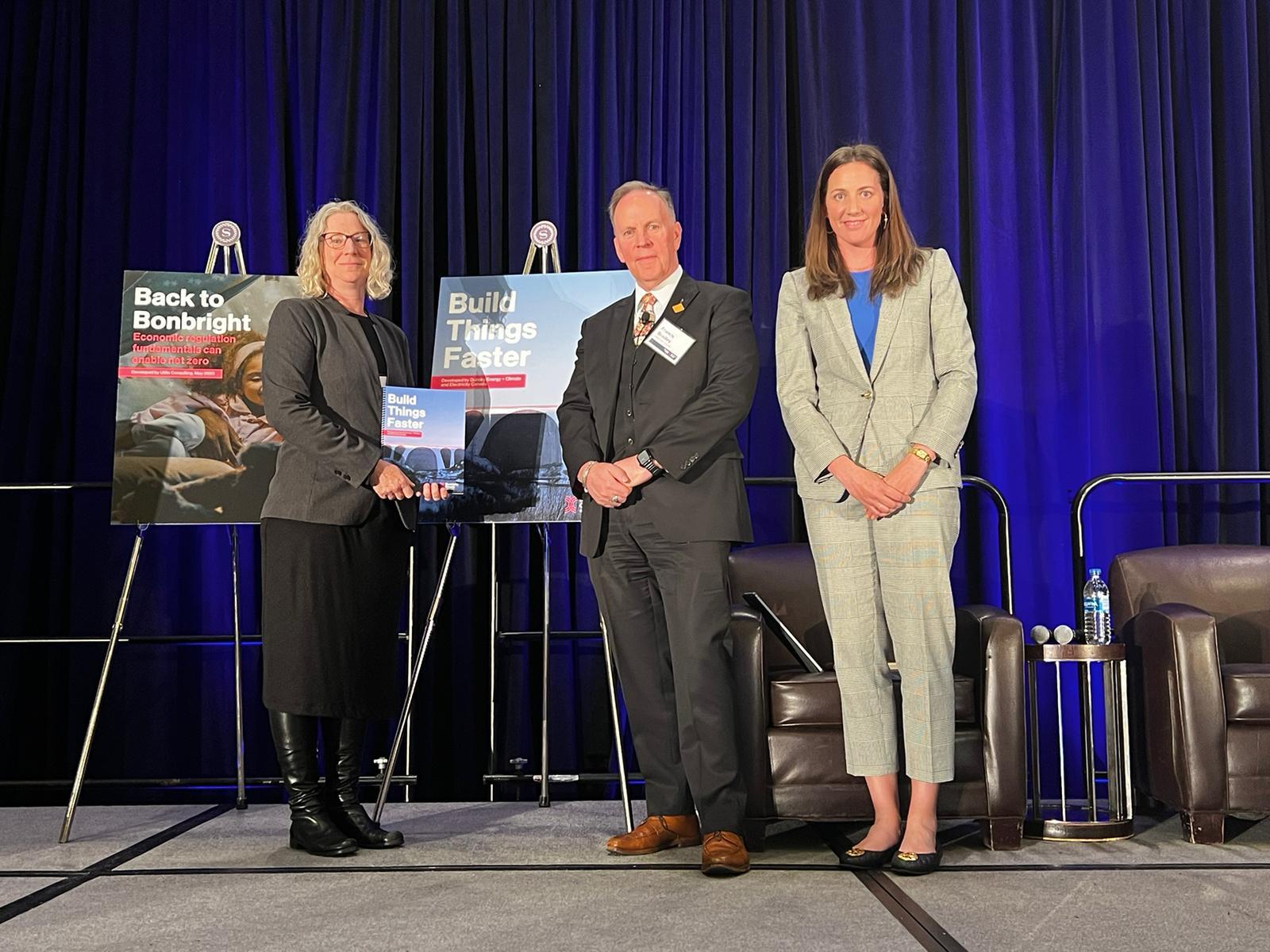
Conversation with Jay Wilson on Electricity Canada’s newest report; Build Things Faster

The dual years of 2035 and 2050 are important to the electricity sector in Canada, as well as the industry at large. These two years represent the goal of reaching net zero emissions in the electricity sector and economy. While many innovations are under way to help bring the electricity sector to this goal by the year 2035, there are considerable hurdles to jump to reach this objective. Electricity Canada’s recent report, titled Build Things Faster, seeks to make this transition to net zero more efficient than ever. We sat down with Jay Wilson, Electricity Canada’s Director of Net Zero and Electrification, to get the inside scoop on this exciting new report.

So Jay, what is Build Things Faster?

As we know, we are trying to make the electricity sector carbon neutral by 2035, and the entire economy carbon neutral by 2050. The main way we can make this transition to carbon neutrality is by becoming more electricity reliant. To do that, we’ll need to double our capacity, whether it be new power generation facilities, workforce, or supply chain improvements.

And this is why Build Things Faster is so important; by building things faster, we can grow to support the increasing electricity demands by the years 2035 and 2050. At the same time, we need to build more so that our net zero goals can become a reality. But there’s a lot to build, and there are many obstacles to overcome. That’s why we put out the Build Things Faster report.

How will Build Things Faster help the electricity sector?

First of all, the report identifies the major obstacles we face as we build more to meet our net zero goals. To do that, we conducted many interviews with stakeholders to identify and document these obstacles – which brings us to the second goal, which is to provide recommendations on how to build things faster. We asked ourselves the question; how can we remove these obstacles so we can get on track to a carbon neutral economy? We made several recommendations toward this end; three major ones, as well as multiple supplementary recommendations.

Talk to us about the barriers to building things faster – how do we overcome these obstacles?

The five major obstacles are barriers to planning, the existing regulatory and approval process, the limited capacity of permitting and regulatory bodies to assess, the persistent shortage of skilled labor across Canada, and lastly, the lack of capital. You can read more about these in the report, but the main theme of all these barriers is that they unnecessarily delay important infrastructure. For instance, the existing regulatory and approval process is difficult to navigate, which takes time. These obstacles have real consequences for not only the electricity industry. If we continue to use the existing processes, by the time we start to get things done, further damage will be caused to our environment.

What are the most important recommendations provided by Build Things Faster?

We laid out three major recommendations on how we can overcome these hurdles. The first is to streamline the building process by implementing the “one project, one approval” framework. Currently when working on new infrastructure, builders must go through several permits and approvals to get anything done. The second recommendation is to coordinate federal project permitting and approvals through a single central federal office. Because, right now, any building process must deal with multiple government departments, with different regulations and requirements. Lastly, we’re calling for an increase in the capacity of economic regulators. Right now, no regulatory body can deal with their existing workload. By expanding the capacity of these bodies, it will allow decision makers to more quickly incorporate net zero goals into the approval process of large infrastructure projects.

What do you want people to take away from reading Build Things Faster?

Build Things Faster was a broad report; what is clear to us is that we need a strategy on how we will meet the 2035 and 2050 net zero goals. I think that the recommendations laid out in this report are a great start to this goal. The steps proposed can sort out many of these challenges, but we need to get started. And we need to get started right away. It’s going to take a lot of work, but it’s doable!

Other Stories

  • Hill Day
  • Electricity Canada announces winners of the Women in Electricity Award
  • Electricity Human Resources Canada (EHRC) Labour Market Intelligence (LMI) Online Survey
  • Regulatory Forum 2023
  • The Flux Capacitor Episode 077
  • Electricity Canada’s Dan Gent participates in the UVM – Utility Vegetation Management Podcast
  • DataBytes : A spotlight on Indigenous renewable energy projects
  • Electricity Canada welcomes three new corporate partners
  • Capitalizing the Cloud : a benefit for Electricity Canada


Read now
Ice Storm Damage 157509718 3000x1958 1

Issue 53 - May 2023

Electricity Canada engages Ontario Mutual Assistance Group to assist with spring ice storm

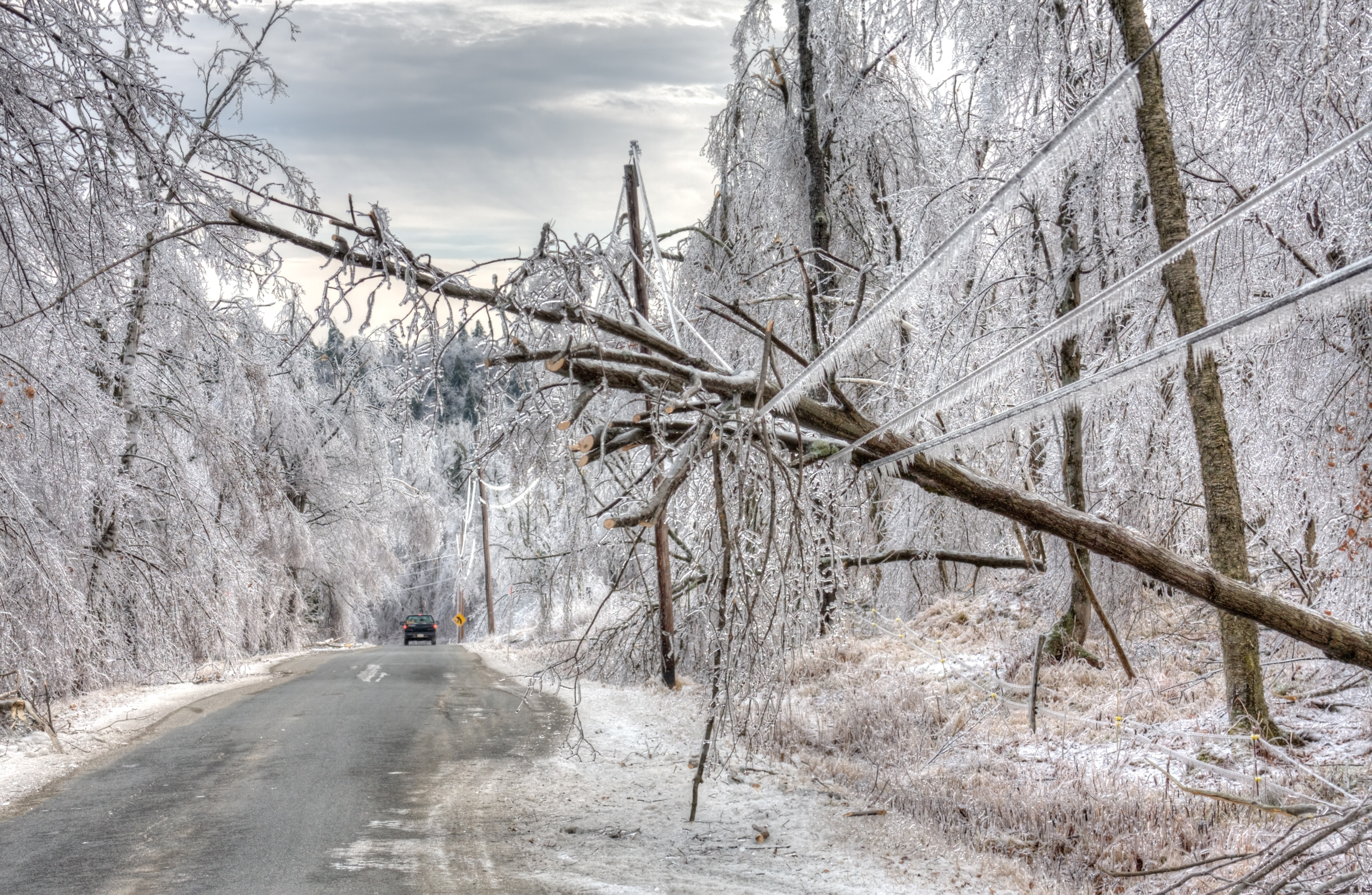
On Wednesday April 5th, a severe ice storm tracked its way to Ontario leaving many electricity customers without power and a thick layer of ice covering just about everything. Initially it was anticipated that the warmer temperatures would melt the ice build up on the trees, but unfortunately that did not happen fast enough, and trees began to break causing more outages than originally anticipated.

Electricity Canada’s Ontario Mutual Assistance Group (OnMAG) was activated on Thursday April 6th to lend a helping hand to the local utilities restoring power. Current Affairs sits down with Electricity Canada’s OnMAG coordinator Shelley Levoy to learn more.


--


Hi Shelley. Tell us a little bit about what mutual assistance is.
I think the concept of mutual assistance is something we are used to seeing when it comes to emergencies with more social causes – food banks sharing resources, hospitals loaning equipment, community centres offering shelter. It’s the same sort of idea, but it’s being done to coordinate efforts to help restore power during an outage as efficiently as possible.

Sometimes the utilities involved in mutual assistance will share that they are partnering in restoration efforts through social media or news release as a way of letting their customers know that they are working as efficiently as possible to restore power. People are happily surprised to see trucks from neighboring communities working on outages.

How did OnMAG come to be?

The proposal for an Ontario mutual assistance program came about in 2019. Toronto Hydro and Hydro One approached Electricity Canada with the idea to coordinate the efforts of the then 60+ Ontario utilities into one mutual assistance program. The program ran as a pilot in 2020 and officially launched in December 2021. Currently over half of Ontario’s utilities are members, with membership growing after each storm activation.

As OnMAG, we have activated 7 times, two of which happened in the first quarter of 2023. It is a program that meets a proven need and the frequency of use has steadily increased.

What kind of resources do members offer each other and how are they coordinated?

The utility requesting assistance sends in a request for what they need, and where they need it. They will stipulate the human resources they need like lineworkers or arborists. They will also itemize the specific equipment they are looking for – like radial boom derrick trucks, evac trucks, single buckets, etc.

The beauty of a regional group like OnMAG, is that since Ontario is its footprint, no ask is too big or too small. Members are always welcome to ask for help when they need it.

Once the utility has this information gathered, they call the OnMAG hotline. Their request is then shared out to the OnMAG membership.

The way the process works, members go through their inventory and itemize what support they can offer. A call is scheduled and the requesting utility reviews the offers and accepts the aid they need while on the call with everyone present.

One call, everyone is there. It’s fast, efficient support.

I have participated in four activations since December 2022. And I can say that in the case of OnMAG, we are working with a very special group of emergency managers. Often, we have more than one utility requesting assistance during an activation. Usually the offers of assistance from the OnMAG membership include more resources than the requesting utility requires. The exercise then becomes a process of choosing which offers are the best fit.


When it came to the ice storm last month, walk us through what happened from the time the storm hit?

We had some warning before the Easter ice storm. The storm landed on Wednesday, but OnMAG had been tracking its progress since Monday. We connected with Environment and Climate Change Canada to ensure we were receiving the latest weather reports and we met as a group on Tuesday to review who might be sitting with extra crews, who was expecting to be short on resources. Really we were doing our best to determine in advance where there might be a need for aid and what the support might look like.


OnMAG activated early Thursday morning with 2 utilities requesting resources. Arborists and vegetation crews were at the top of the request list. Crews worked throughout the long weekend with final restoration complete in time for Easter Sunday dinner.


Extreme weather events are on the rise due to the changing climate. What does this mean for OnMAG and other mutual assistance programs across the country?

Absolutely, climate change is increasing the incidents of extreme weather. Over the last few years, most of the major outages are related to weather events. When you put those two facts together, we are seeing more weather-related outages on a larger, more intense scale. On any given day a utility might need extra vegetation crews, they might need specific equipment. It is not feasible financially or from a human resource perspective for each utility to have all their own specialized equipment or to be fully staffed with specialized crews to tackle major restoration. Having a larger "team" to call upon for assistance is an incredibly efficient way increase your crew with one call. That is the kind of insurance that mutual assistance programs like OnMAG offer.

Other Stories

  • Electricity Canada goes to Washington
  • A win for Electricity Canada members: TELUS appeal is dismissed by the Federal Court of Appeal
  • Minister Smith and Oakville Hydro launch green button to help local energy customers save money
  • Reliability and Resiliency Award is accepting applications until July 31st
  • Electricity Canada facilitating North American EV best practices
  • DataBytes presents: A peek at the federal budget
  • Francis Bradley appears on Strategy Corp’s Intended Consequences podcast
  • Electricity Canada welcomes Microsoft to the corporate partner program
  • Electricity Fundamentals in Canada reaches 1,800 students
Read now
Shutterstock 197589731

Issue 52 - April 2023

Electricity Canada on Federal Budget 2023: Funding for electrification is good news

On March 28, Deputy Prime Minister and Minister of Finance Chrystia Freeland released the much-anticipated 2023 Federal Budget, A Made-in-Canada Plan: Strong Middle Class, Affordable Economy, Healthy Future. Normally, a budget would have a few references to electricity scattered throughout. This year, investing in clean electricity was a whole section of the budget as part of the government’s clean energy mandate. This was backed up by funding, with almost $1 in every $8 of anticipated new spending going to clean electricity projects through a variety of means.

In light of these important developments, Current Affairs talked to Vice-President of Government Relations Michael Powell for his perspective on the gains made by the budget, and what’s next.

--

Hi Mike. What were the big “wins” in the budget for Electricity Canada members?

The biggest win is a commitment to create a new electricity-focused investment tax credit, which will cover interprovincial transmission and most clean generation sources and be accessible to basically every kind of electricity company, be they tax paying, non-tax paying, indigenous-owned, pension plan-owned, etc. That will be for 15%, which means take 15% off the top of capital costs of those sorts of projects. In addition, we saw top-ups for funding programs like things like the Strategic Renewable Electrification Pathways Program (SREPs) and smart grid funding. There were also more details on how the government is going to move forward on things like the Canada Growth Fund, as well as more money for the Canada Infrastructure Bank, and a commitment to figure out how we can build things faster.

All of that gets to what we have been asking for in terms of our Canadian Electricity Strategy. These are all elements of our three pillars of the strategy, which are the funding, the certainty and then the picking up the pace. It was a good day.

Speaking of the Canadian Electricity Strategy, were there hints of such a thing in the budget?

Yeah, it touches on those three pillars that we've been identifying, which again are figuring out the funding side of things – both in terms of access to capital, but also the tax dollars to help reduce costs for customers. And we saw both of those things. With elements of certainty, we have the continuation of the Canada Growth Fund and even more opportunities, it seems, for so-called “carbon contracts for differences” which will de-risk some questions around carbon pricing. When it comes to pace, we have a reaffirmation of the billion and a half dollars or thereabouts for organizations like the Impact Assessment Agency, but also on a commitment by the end of the year to have a plan to make these organizations move faster on approvals.

What initiatives do you think are going to be the most impactful for customers in all this?

I think the biggest one in the long term will be not just the new electricity investment tax credit, but the suite that has been coming along for clean technology, for carbon capture and for hydrogen production, all of which will allow our members to build new electricity infrastructure and reduce their costs.

What initiatives do you think are going to be the most impactful for customers in all this?

I think the biggest one in the long term will be not just the new electricity investment tax credit, but the suite that has been coming along for clean technology, for carbon capture and for hydrogen production, all of which will allow our members and electricity companies to build new electricity infrastructure and reduce their costs.

It's interesting with the new electricity investment tax credit, the government actually ties that to a reduction in price for consumers so that the dollars that are put in by the federal government are passed on to consumers through whatever mechanism, be that rate design or other means. I think that what that means is that as we figure out how we build the system to build a decarbonized grid for 2035 – and meet the needs of economy-wide electrification as we go towards 2050 – and as we double or triple the amount of electricity we need, the federal government will be putting dollars into the pile so those costs don’t end up on the bills that customers get each month.

You mentioned about increasing grid capacity 2-3 times before 2050. Are we closer to building things faster?

I think so. There's a couple of pieces to that. One is our members are able to make the investment decisions that will even get into the question about whether you start putting shovels in the ground. I think the tax credits do that. I think additional dollars from the Canada Infrastructure Bank will help firm up some of the financing around that. And ultimately, the whole point of the Canada Growth Fund and the forthcoming contracts for differences regime will help make it easier for our members to get financing for these sorts of long-term commitments.

The big one to watch, I think, though, is that the government acknowledged that it's hard to get major projects done and signalled a commitment to roll up the sleeves work with all parties and really think about how we can pick up the pace. Ultimately, I think what the tone of the budget is—and, admittedly, there's a lot of work to do yet—is that they’re trying to address the concerns we've been raising about the barriers we see to building from the government side. They're trying to answer them so that it is now on us to get going. That's a better spot to be than it was on Monday of this week [before the budget was announced]!

What is the main takeaway for the electricity sector from this budget?

I think the main takeaway is that the federal government sees a role for itself in helping build out electricity infrastructure. Historically, we talked about electricity being a provincial responsibility. But there's lots of things that are provincial responsibilities where the federal government has decided they have a role in funding. It's even in the budget document itself: there are eight pages after the electricity stuff, there is a map of Canada where they highlight places where they are investing in things like twinning a highway in Nova Scotia, which is very much a traditional provincial responsibility, but it’s now the kind of thing we think the federal government would pony up money for. Transit is another example of that.

I think the big lesson here is that going forward, the “table stakes” will be that where there is a desire for the federal government to build cleaner and faster, they put money in to facilitate that, particularly on a lens of how it makes it affordable for Canadians.

Other Stories

  • Flux Capacitor podcasts at recorded at GLOBExCHANGE
  • Caucus briefing day on the Hill
  • Electricity Canada and its members are proud to provide critical assistance to the people of Ukraine
  • Electricity Canada completes consultation on the modernization of the Weights and Measures Act and the Electricity and Gas Inspection Act
  • Canadian Club of Ottawa hosts net zero luncheon with Electricity Alliance Canada
  • Electricity Canada in Washington
  • DataBytes: The push on penta
  • DataBytes: Forecasting electric vehicles
  • Electricity Canada welcomes Holland Power Services to the corporate partner program
  • Generation Council in-person meeting

Read now

Sign up to receive the next edition of Current Affairs now

* indicates required
Please let us know if you're a