

Current Affairs

Current Affairs is Electricity’s Canada monthly newsletter featuring advocacy efforts, member success stories and news regarding the industry.

Riel 4 copy

Issue 64 - April 2024

It's time to get to yes

Despite massive gains over the past year, the electricity sector still faces an enormous challenge with a culture of “no”. Electricity projects are being delayed, or held up in approvals. There are simple solutions that can help make our grid cleaner, more reliable and affordable.

As part of this, Electricity Canada’s newest publication the State of the Industry publication is called “Getting to yes”. This document showcases the challenges and opportunities facing the electricity industry to date. Current Affairs sits down with the co-editor of the report, Graeme Burk, Director of Communications at Electricity Canada to learn more.

Hi Graeme, thanks for joining us. So, what is the State of the Industry?

Every year, Electricity Canada produces a document that where is the electricity industry at? It's something that we use in our lobbying efforts, when we're working with government and stakeholders. It gives a sense of what are the key priorities that are facing the sector right now. It's like a State of the Union, but it's for the electricity sector in Canada.

Why is this report called “Getting to yes”?

When I first started Electricity Canada in 2022, the theme of the state of the industry was ‘Accelerating Net Zero’ because we have a lot to get done, and we have to get moving if we want to make the grid carbon neutral by either 2035 or 2050. Last year, we called it ‘Build It’ because we felt that getting the grid built was a big thing and we were worried that we were losing the daylight, so to speak, and needed to get moving and get building.

This year we decided to not go with these ‘we need to get building’ metaphors and thought, ‘what is it that is keeping us from actually getting moving?’ So we called it ‘Getting to Yes’, because we felt that there are certain things that are just holding us up: Things that are holding us up in terms of regulation. Things that are holding us up in terms of legislation. Things that are holding us up in terms of procedure.

There are a whole variety of things out there that keep us from moving forward and we wanted to explain that a bit more. Our speed at achieving deadlines like 2035 or 2050 are not ramping up like it should.

How is the electricity sector in Canada doing right now?

It was a big year for electricity last year. That's the thing that I think is really important to understand. We made real steps forward towards building a bigger, more reliable and more affordable electricity grid for 2050. The federal budget had almost one dollar out of every eight go to clean electricity projects. It’s a scope for building that has been unseen since the Second World War.

At the same time, since that budget we have had to deal with a great deal of uncertainty. The Clean Electricity Regulations came out in August. They were only the first draft and there are revisions on the way, but there was a lot of frustrations about what was in the draft and how much can be realistically done in the time frames they're asking with the resources that are being allowed.

And then, there's big areas for investment that were announced in the last budget like capital tax credits and carbon capture for difference and neither of those have progressed very far either. So, on the one hand, we have in the big picture a really great situation for electricity that's never been better for the sector. But on the other hand, it's just all these little details that we need to get ironed out so that we can get to that big picture.

What are the things Electricity Canada are most concerned about in this year’s State of the Electricity Industry?

We have concerns getting to build of course. One thing I keep going back to is that in this year's RBC Climate Action Institute report, they charted massive growth for the electricity sector that took into account electric vehicles, home heating and more. But when they actually took a look at our sector specificly, their word of the year for electricity in Canada was moratorium. A lot of projects just keep on getting held up. The Atlantic Loop is probably the biggest example. That was a huge project that I think would have made all kinds of big advances for building infrastructure but it’s been placed on hold indefinitely. And in Alberta, they had a temporary kind of suspension of renewables.

We are concerned about the pace overall. If you look at from the time the first notion of the Clean Electricity Regulations happened, to when first put out, to now, when we're still figuring out what happens next, that was a really long time. And the process of finalizing the CERs is nowhere nearbeing been done. There are lot of long-term projects that are held in the balance as a result.

There's also big tug of war between federal policies and provincial and territorial regulators, and that's one of the biggest problems we noted with over and over was that you've got a federal mandate to decarbonize, and at the same time, you've got regulators who are often kind of working from the rulebook that was devised in the 1960s. This is going to create real problems for large scale interprovincial projects.

What are top concerns going into 2024?

I think reliability and resiliency is the biggest of them. When you look at last year, about 40 to 50% of outages were due to weather related incidents and normally temperate places like Kamloops, British Columbia had recorded 62 hot days over 30 degrees Celsius. In spite of everything that was thrown at the grid, it worked. The equipment had to be closely monitored, and we have definitely pushed ourselves to our operational limit. We’ve got to work hard in 2024 to make sure that we can keep doing that.

Affordability is probably the other big concern we need to make sure the capital costs of building don't wind up being put on electricity bills. I think there's lots of things that we need to do to make sure that building the grid overall is borne by the taxpayer and not by the individual ratepayer.

What surprised you the most when you were writing the report?

I think the thing that surprised me the most was the section on regulation and all the kind of complicated complications in trying to get something built. I mean, on the whole, regulation is quite necessary: we need the government to make sure that companies aren't going to pollute or aren't going to damage the public trust. But at the same time the unnecessarily complicated nature of the Impact Assessment process just boggled my mind! I was astounded that because of project size, it can take forever to get anything through Impact Assessment. In our research, we decided to go look at how many projects went through Impact Assessment and then suspended going through the process for whatever reason. There's at least six such projects and a couple of them were big electricity projects. Which is sobering because no company will start going through that process and all the hurdles that you must get through, unless they're serious about it and want to make a serious investment.

I think government needs to streamline that process so that it becomes easier to move forward because unless we do, people are not going to feel confident enough to invest because they're going to be worried that things are going to get held up again and again and again.

If there is one chapter in the report that you think everybody who works in the electricity sector should read, what chapter would that be?

I really like the chapter on social license. Social license was something I knew nothing about, and our Vice President of Communications and Sustainability, Julia Muggeridge wrote it in a brilliantly accessible way that easily explained the process. We had a case study on SaskPower, and how they have gone about about trying to get people to accept things like Small Modular Reactors and other energy builds, and its really community engagement at its finest. It’s about going to a hockey rink and meeting with people and taking their questions. During COVID they held huge community Zoom calls and the engagement they achieved was just inspiring.

But my main takeaway while I was reading that was: That's the way that we're going to get to yes. It comes from people just figuring out how to talk to each other and getting on with figuring out how to work together. I think that's true for big regulatory things and big interprovincial electricity projects as much as it is about figuring out where the best place to put a Small Modular Reactor is in Estavan, Saskatchewan. It all starts with talking to people.

Read “Getting to Yes : the State of the Canadian Electricity Industry.

Other Stories

  • Upcoming Federal Budget 2024
  • Electricity Canada’s Board of Directors participated in the Deputy Ministers’ Meeting
  • DataBytes presents: Dig Safe Month
  • New Episode of the Flux Capacitor
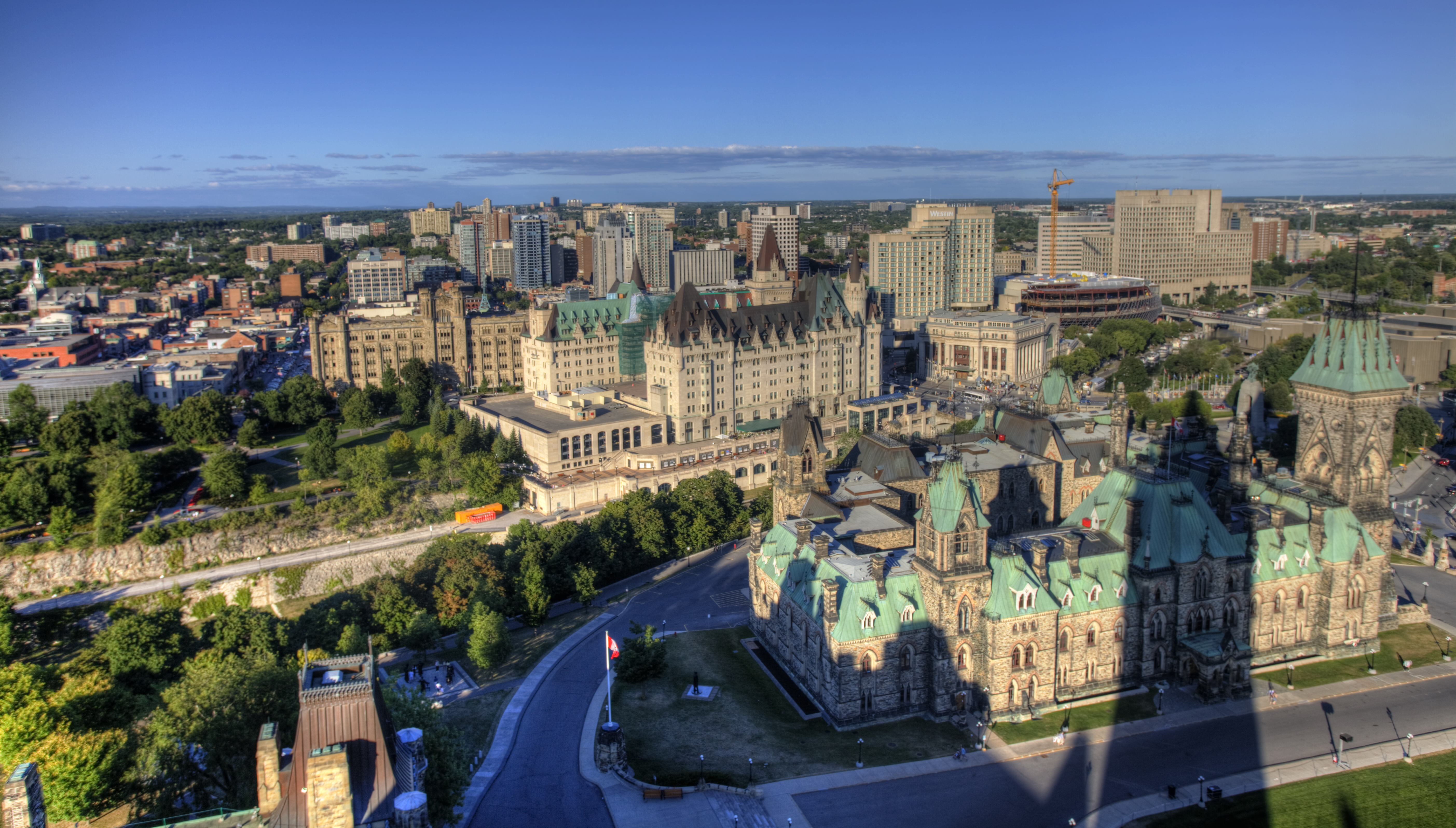
  • Electricity Canada launches “Getting to yes” in Ottawa
Read now
Father and daughter enjoying at home 478536428 5760x3840 1

Issue 63 - March 2024

Understanding members customers with Diana Dominique

Members customers are always top of mind in the electricity sector. Every year, Electricity Canada conducts a nation-wide customer satisfaction survey on behalf of our utility members to crunch the numbers and learn first-hand, how they can continue to make electricity safe, sustainable and affordable for Canadians. To learn more about the results of the 2023 National Customer Survey, Current Affairs sits down with Electricity Canada’s Senior Director of Customer Solutions and Sustainability,  Diana Dominique. 

Hi Diana, thank you for joining us. Can you talk to us a little bit about how this survey came to be and why it’s so important for our members and Electricity Canada? 

We’ve been conducting this national customer survey since 1988 and it's largely focused on the residential customer segment and members find value in the national perspective regarding customer satisfaction.

We've inserted some actionable insights into the survey, so seeing those areas that we need to focus on, members find that valuable, and the regional insights as well.

The results are in, take us through some of the key trends that were found, is there anything surprising? 

The key trends that we saw from this year's research are that largely the general satisfaction and Customer Satisfaction Index is largely stable, which is really great to hear! In terms of general satisfaction, 72% of customers say they are satisfied with their electricity distributors and this percentage is higher among those who have familiarity with the system. Generally, people feel that they get good service and that their electricity is reliable.

It's an overall good news story for the industry and in my work with the Customer Council and the Sustainability Committee, members have been working hard on these things that matter most to customers. It's really good to see that the work we've been doing over the last number of years is reflected in the data.

When we talk about those things that are important for us to focus on, its corporate social responsibility and customer focus. Those are two measures that are connected with brand trust. A ‘customer focus’ includes things like caring about the customer and being transparent, while ‘corporate social responsibility’ includes those metrics like operating in an environmentally responsible manner and protecting public safety.

The surprise is that price and value have held steady this year. That's really encouraging for the industry and we think that a reason for this could be that electricity rates have not increased at the level of inflation like let's say, gas and groceries. People generally are satisfied with the prices that they're paying and the value of electricity that they're getting. However, compared to other tested metrics, it is still a bit weaker, so we have work to do on this in the future.

Another surprise is that compared to last year, the satisfaction for all reliability and power quality attributes has declined, even though the number of power outages that customers have been experiencing have stayed the same.

This last one isn’t really a surprise to us because we’ve seen it before, but people are just not engaged when it comes to the energy transition even though we're seeing more extreme weather events. Canadians care about climate change, but when it hits their pocketbook, they’re not as concerned.

What is most important for Canadian electricity customer and why? 

I think not only this year, but going back to what we just said, price has always been the number one important factor for customers. Inflation has a major impact on household finances. And that we saw that 67% of customers stated that making electricity prices more affordable was a top priority. This was followed by strengthening the electricity grid to make it more resilient to severe weather events and grid modernization, so that customers had more choice around technology.

Based off of these results, how do you anticipate the results coming through for 2024? 


In 2024 things can change quickly, but I think it will largely remain around inflation and affordability. Thats going to be the key thing for our sector. I think the results will reflect that sense in terms of what I mentioned before, mortgages will come due in the next few years, and they'll be more pressure on people in terms of affordability for those low income and vulnerable customers, and even for middle class Canadians. We will be monitoring this.

We’ve also found that customers don’t really think about electricity that much until there's a power outage or when they get their bill. As an industry, we need to make sure that we really do a better job of communicating the value of electricity to our customers.

Other Stories

  • Clean Electricity Regulations discussion paper released
  • Ontario Mutual Assistance Group travels to Paris
  • Signed CanMAG agreement
  • The Flux Capacitor releases two new episodes
  • New video: Let’s have some toast
  • Electricity Canada welcomes five new corporate partners
  • DataBytes presents: a customer view
Read now
FOTI Social Card 1

Issue 62 - February 2024

New Faces of the Industry award celebrates individuals in the electricity sector

Starting this coming National Electricity Month in June, Electricity Canada will be celebrating the people who innovate and the lead the electricity sector with our new “Faces of the Industry” campaign and award.

As we all know, the electricity sector has some of the most talented people working today. We have innovators, visionaries, leaders, even heroes. This award came about because we should celebrate this talent. The electricity sector isn’t just companies: it’s made up of people. The Faces of the Industry award is designed to put a human face on the work our sector is doing right now.

This spring, Electricity Canada will be awarding six individuals within the electricity sector, nominated by you, as Faces of the Industry. These winners will become part of Electricity Canada’s National Electricity Month social media campaign in June and will take part in events during that month.

We are looking for a member companies to nominate people in all aspects of the electricity sector from lineworking to engineering to safety to construction and everything else. These people will need to have demonstrated outstanding achievements in their field, as well as innovation and leadership.

The nomination form is on our website. Nominations close on March 15, 2024. This award is sponsored by PTI Transformers.

Other Stories

  • New video: Toby in a Tangle
  • DataBytes presents: artificial intelligence
  • Electricity Canada responds to Canada Electricity Advisory Council interim report
  • Electricity Canada in the media
  • Two new episodes of the Flux Capacitor
Read now
Adobe Stock 266698740 1

Issue 61 - January 2024

What better time to start thinking about the future than bright and early into the new year?

Current Affairs sits down with Dan Gent, Director of Transmission and Reliability for a weather recap.

Hi Dan, thank you for joining us. Extreme weather was a huge topic in 2023 for Electricity Canada members. Wildfires in general wiped out over 3000 hydro poles, we’ve had tornados and hurricanes, ice storms in the middle of April, it’s been hot, it’s been cold, it’s been rainy, and it’s been dry… What’s the forecast for 2024?

I’ve heard a lot about wildfires, last year, and honestly, we should expect wildfires again this year, hopefully not as much as 18 million hectares burning, which was a Canadian record. Thousands of poles destroyed and some of those fires caused direct blackouts in major urban centres. Now as for the rest, I’m no meteorologist, but I believe we can expect 2024 to be another rocky year. El Nino, the warmer and dryer air phenomenon we are experiencing right now, is not expected to end until February and some reports have said March. And with El Nino, comes a warmer remainder of the year, and with heat the effects of it, from droughts to wildfires and because heat, stress on the electricity grid.

Because of El Nino, I believe we should expect to see even more hurricanes in the Atlantic, who have seen already their fair share in the last few years.

How do our members prepare for this kind of weather every year? And if something is broken, how do we fix it?

Three words. Plan, plan and, plan. Companies in our industry must plan for the worst. Utilities develop predictive analysis on weather patterns that overlay the grid to identify weak spots and shore them up before the storm arrives. That way, we can analyze what will get hit and potentially how hard and look into bringing in reinforcements like mutual assistance if necessary.

There is a need to ensure we have replacement parts. Obsolescence is not an option. Electricity Canada has discussed this extensively regarding the final phase-out of pentachlorophenol-treated utility poles. We need to be creative and find solutions for replacing damaged and broken equipment when the supply chain is not there for us. We also need to ensure we have the skills and people in place to solve the challenges we will face today and tomorrow.

What do we need changed at a regulatory level to make this easier?

This is a great question. Provincial regulators are for the most part “economic regulators”. They want to see affordable rates and a reliable grid which requires a lot of reporting from utilities to make decisions.

It would be wonderful if regulators could see what else can they do to enable stronger reliability and improved resiliency for electricity providers. Can they create a research and development program for wildfire mitigation techniques, like they have in Australia?

Maybe regulators can look at new utility programs geared towards improving reliability and create a pilot project in partnership with the utilities. We can’t be doing the same things anymore. Climate change is here to stay. All stakeholders in hour industry need to spin things around and address our problems differently.

In 1998, an ice storm wiped parts of Quebec and parts of Ontario for over a week. Could this happen today and are we ready for it?

Oh yes, 1998 brings back memories. We had a State of Emergency, the military was called in, ice and fallen trees crushed transmission towers. Depending on where you lived you may not have received power back for 6 weeks or more. It was a challenging time for many people.

To answer your question, never say never.

I believe the grid is stronger now with newer standards in place. Transmission towers can now withstand even more weight, we have newer tools and technologies. There are many lessons we learned from the 1998 ice storm. I don’t think it can never happen again, in the age of ever persistent storms however, I do think we are better prepared and more resilient now then ever before.

Other Stories

  • Sustainability for Life: A New Program in 2024
  • Canadian Electricity Advisory Council releases interim report
  • Electricity Canada in DC
  • DataBytes – The best of 2023
  • Electricity Canada welcomes ABB to the corporate partner program
  • The Flux Capacitor releases two new episodes

Read now
Powering Partnerships Lovely Light Films 87

Issue 60 - December 2023

A year in review with Francis Bradley

After this November’s Powering Partnerships Symposium and board meeting, Electricity Canada settles into December, reflects on an incredible year and prepares for what is on the horizon! Current Affairs sat down with President and CEO Francis Bradley for a 2023 recap.

Hi Francis, thank you for joining us. This year has already been a standout, beginning with the Federal Budget’s investments of electrification and ending with the draft Clean Energy Regulations. What has been the most exciting thing to see?

I think from my perspective it would be the first of those, the federal budget and its investment. This is the first time we've actually seen real and substantial support for clean electricity investments from the Government of Canada. This is absolutely historic! We’ve been suggesting for many years now that decarbonization through electrification is a public good. It's a national priority and it’s an expansion on the electricity system to meet this national aspiration. As a public good, the additional costs relating to meeting our greenhouse gas reduction ambitions should be borne by society as a whole, not just by electricity customers, because the electricity sector is expected to decarbonize the rest of the economy. As a result, we need to look at how we're funding this, and fund it appropriately.

One in every $8 of new spending in the budget is aimed at clean electricity investments. That's a great story. However, this is not a silver bullet. But it is a start. It’s a very important first step and it shows a willingness on the part of the federal government to put its money where its mouth is, to use the words of Environment Minister Steven Guilbeault on the night of the budget.

We’ve just hosted one of our biggest events of the year at Powering Partnerships highlighting “The Future Of…” with topics discussing the North, technology, artificial intelligence, transportation, electricity, and the future of people, what is your take on the future of Electricity Canada as an organization?

As an association, we've been the nucleus of the electricity sector for more than 132 years. I've been here for 37 of those years. What I've seen in my time here is that we’ve been successful as an organization because we’re able to repeatedly reinvent ourselves and, like the industry we represent, we are nimble in that way.

When I began here at Electricity Canada, or should I say when I began here two name changes ago when we were the Canadian Electrical Association, our primary focus was operational: it was information exchange of a technical nature and technical research. Now, we’ve evolved over time and we’ve changed as the needs of the industry have changed in terms of what they need from a national association. Consequently, we’ve become an advocacy organization. Since our last strategic plan, we're increasingly now focused really on the future – on emerging issues and on the policy, legislative and regulatory changes that are going to be required to enable that.

I think Powering Partnerships really was a great example of that future focus. It was the culmination of the changes that we've been bringing to the association for the past several years in terms of making sure that we were clearly focused on the future.

What are the biggest challenges and opportunities for the electricity sector in 2024?

It’s going to be all about reliability, affordability and decarbonization. Certainly, in the year ahead, but not just in the year ahead. In fact, it will continue to be about reliability, affordability and decarbonization out to 2050 – and how we balance those three things. We need to work out what are the policies that we need in order to reach our aspirations of a net zero economy in 2050.

So, 2024, is the next step in all of this is that we have to figure out how we get good projects built and how we get them built faster.

We also need to simplify the approval process and get rid of overlapping processes and we need to get rid of duplication between different levels of government.

Furthermore, to do all this we're going to need people to achieve the energy transition. Unfortunately, I see nothing in 2024 that suggests that we'll suddenly have a solution to the skills and talent shortage. There are a lot of people seeking to address this problem, including our members and our partners at Electricity Human Resources Canada.

The other thing that keeps me worrying is supply chains. The delays for critical equipment is actually growing – I'm hearing this from a quite a few of our members that those delays are not getting shorter. There is also competition from other sectors that have very similar needs and are also growing such as transportation, telecommunication. And there’s competition from the U.S. thanks to the Inflation Reduction Act.

In 2024 while these challenges will absolutely be a high priority for us. However, but they are also opportunities. In fact, I think I think there are huge opportunities when we're talking about building that cleaner, brighter and better future.

We have the opportunity to develop and implement new technologies and new solutions that are going to result in making life better through a cleaner economy, more comfort, more convenience for customers. And we also have this opportunity to do so equitably, and use the massive growth that we're going to see in the electricity sector to be the means for reconciliation with Indigenous Peoples as our sector increasingly welcomes them as partners.

Switching gears here, you are almost at the 90th episode of the Flux Capacitor. Who would be your dream guest when you crack 100 and why?

If I could use my Flux Capacitor time machine, I’d go back to 1891 and I'd bring in J.J. Wright, the founder of this organization. I’d put him in the passenger seat of the DeLorean and bring them to the future so that he'd look around and I suspect his initial reaction would be amazement at all that has happened and how different society is because of the electrification. On the other hand, maybe he'd be disappointed coming from 1891 and jumping out to 2023 and looking around and wondering where's the flying car?

If I had to pick somebody who was a living person… I would get Bill Gates as a guest on the podcast. He would be absolutely fascinating to talk about generally because of all that he's done throughout his career and the massive impact on a lot of the technologies that he's brought forward. I'd like to really unpack with him the book he wrote a couple of years ago, How to Avoid a Climate Disaster.

It was a fascinating read, and while it was about the impending climate disaster, and it was very hopeful. I don't know if somebody's got a friend that happens to know Bill Gates, but there you go.

Other Stories

  • Government of Canada releases Fall Economic Statement
  • Electricity Canada presents the winners of the 2023 lifesaving awards
  • Electricity Canada presents the inaugural Jim McFadgen Memorial Award for Excellence in Standards at Powering Partnerships
  • Electricity Canada honours members for excellence in reliability, safety and sustainability practices
  • Advanced Utility Systems joins the Corporate Partner Program
  • DataBytes Presents: A Year of Wildfires
  • New Episodes of the Flux Capacitor
Read now
I Stock 525960902

Issue 59 - November 2023

Electricity Canada’s annual symposium, Powering Partnerships is on the horizon!

This event unites members from coast-to-coast-to-coast with CEOs and senior executives, corporate partners, electricity sector stakeholders and elected officials to discuss industry hot topics and learn from keynote speakers. Current Affairs sits down with Vice President of Communications and Sustainability Julia Muggeridge to chat about this year’s approach discussing the future of the electricity sector.

Hi Julia, thank you for joining us. Powering Partnerships is the biggest event of the year for Electricity Canada. What makes this symposium special compared to previous years?

Powering Partnerships was conceptualized five years ago to bring together government stakeholders, corporate partners, and member companies. This event is planned and executed entirely by a small team at Electricity Canada. If you attend Powering Partnerships, you’ll see five years of lessons learned which has evolved into top-notch programming, a beautiful award ceremony and lots of networking opportunities.

How did this year’s theme, “the future of” come to be and what do you think it means for the industry?

Like most good ideas at Electricity Canada, this one started with an article from a colleague! There was an article in the New York Times about Artificial Intelligence, and it noted that, while AI can be frightening, it can also be used for the betterment of humankind. I began thinking about how all of the different futures we reflect on at Electricity Canada are inherently good. They are good because people – who will shape the future – are good. With this optimistic approach, our team has worked to shape an agenda that sees the good in technology, in transportation, in AI but most importantly, in people.

This year you've moved from panels with industry professionals to individual talks by thought leaders. Who is on the guest list and what will they bring?

We are delighted to be welcoming six keynote speakers with a variety of backgrounds to Powering Partnerships. The guest list includes experts in electricity (of course!), technology, transportation, and artificial intelligence. Because the focus of the day is how people interact with future technologies and transportation, we have bookended the day with two keynotes focused on people. Our opening keynote is focused on the North and how we can better collaborate with and think about the people in the north. Our final keynote will bring together the days event and talk about the future of…. People: where do we fit into the future, at work, at home, interacting with technology. But don’t take my word for it- see our full list of speakers here!

The symposium agenda has six interactive keynote presentations: the future of the North, the future of technology, the future of artificial intelligence, the future of transportation, the future of electricity, and the future of people. Do you think we are ready for what comes next?

I’m hoping at the end of the day on November 21st, we’ll have a clear picture of where people fit into the next 30 – 50 years. But, as you’ve probably noted, I tend to take an optimistic approach to these things.


What is one takeaway you want the audience to leave with after the Symposium?

The future is electric, bright and good.

For more information on Powering Partnerships visit Electricity Canada’s website.


Other Stories

  • Electricity Canada attends International Electricity Summit
  • DataBytes Presents: Happy Birthday ONMAG
  • ACES Caucus Kickoff event in DC
  • The Flux Capacitor releases two new episodes
  • Electricity Canada welcomes three new corporate partners
  • Strong Electricity Canada presence at security conference
Read now

Sign up to receive the next edition of Current Affairs now

* indicates required
Please let us know if you're a